
Backlinks are the basis of Google’s algorithm and allow the relevance of a web page to be determined.
Oncrawl offers the feature “Backlink Report” to cross your Log / Crawl / Backlink data with Majestic in order to optimize your netlinking strategy for your on-site SEO.
Key points to know before starting an analysis:
- Data are displayed in backlinks,
- Only backlinks in follow are available,
- Majestic data relate to Fresh Index (Backlinks found in the last 90 days),
- Check the quality of your segmentations based on URLs.
Which data is available?
- Domain CF: the Citation Flow (Majestic indicator) allows the quantity of the links to be analyzed,
- Domain TF: the Trust Flow (Majestic indicator) allows the quality of the links to be analyzed,
- Backlinks follow: number of backlinks,
- Pages with backlinks follow: number of pages receiving backlinks,
- Compliant pages with backlinks follow: “indexable” pages,
- Orphan pages with backlinks follow: pages which are not in the site structure but still receive links.
Pages with backlinks by state of indexation
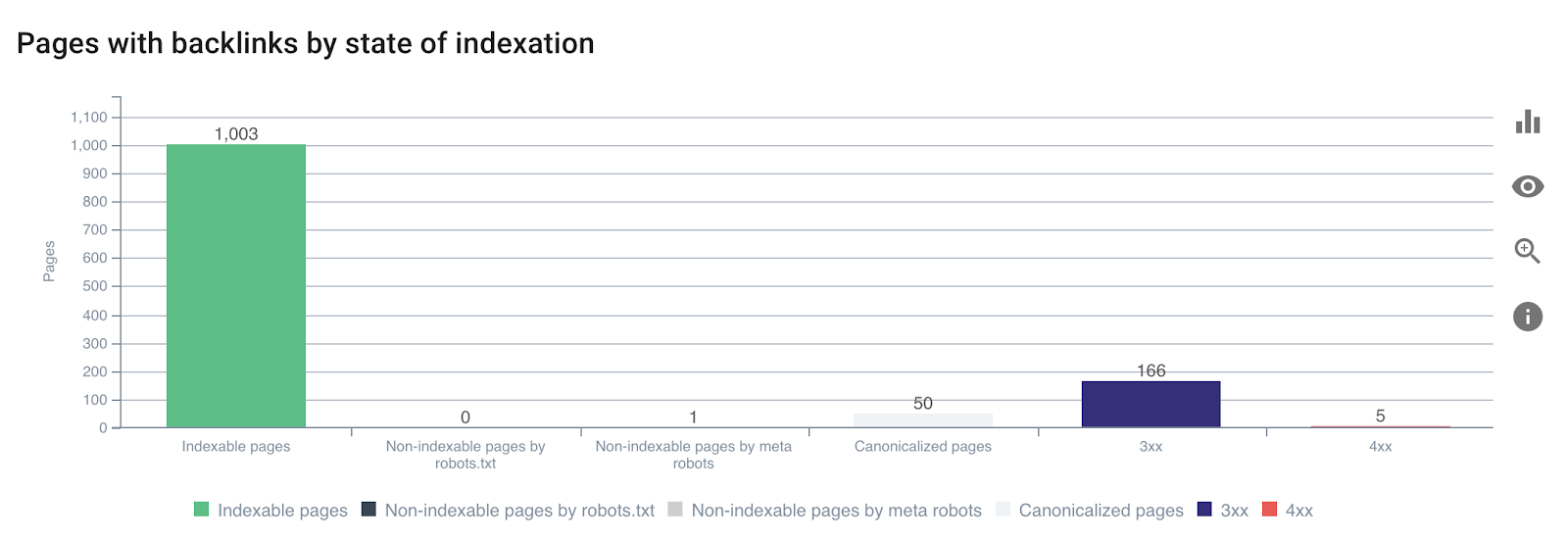
This chart allows us to find out if a typology of pages (No indexable, with a canonical, in 301, etc…) receive backlinks.
I recommend that you click on “Indexable pages” in order to hide this series of data:
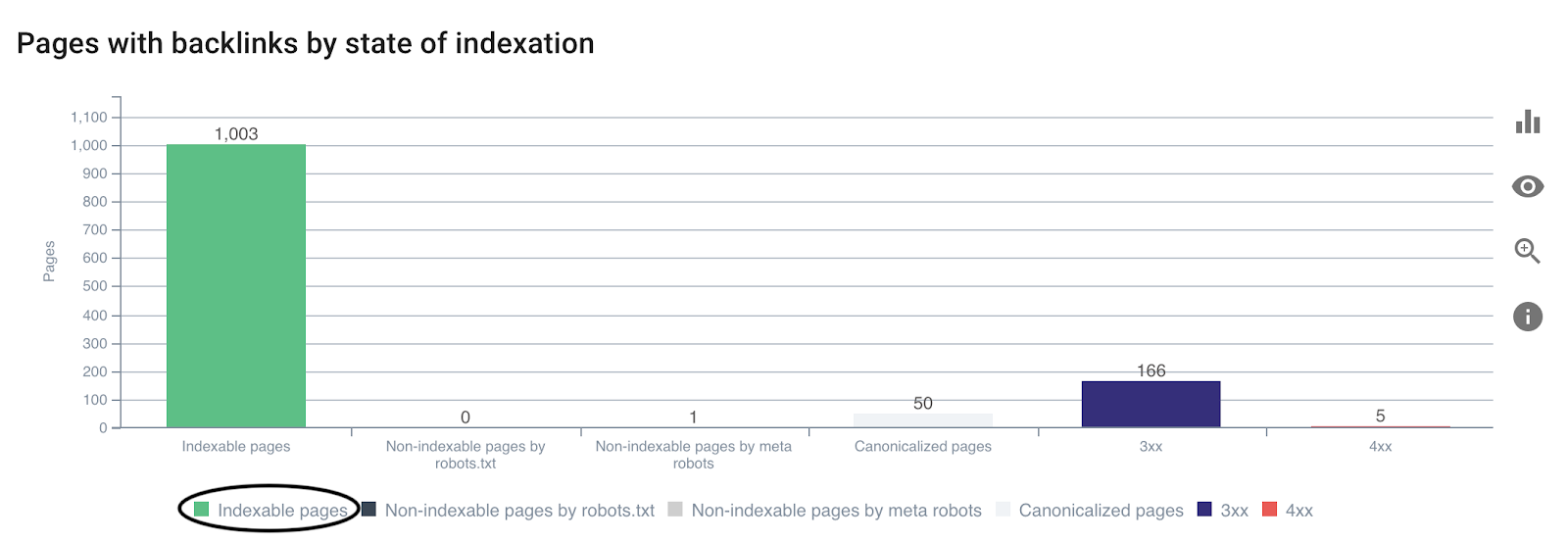
This gives us only the “not compliant” pages which receive backlinks.
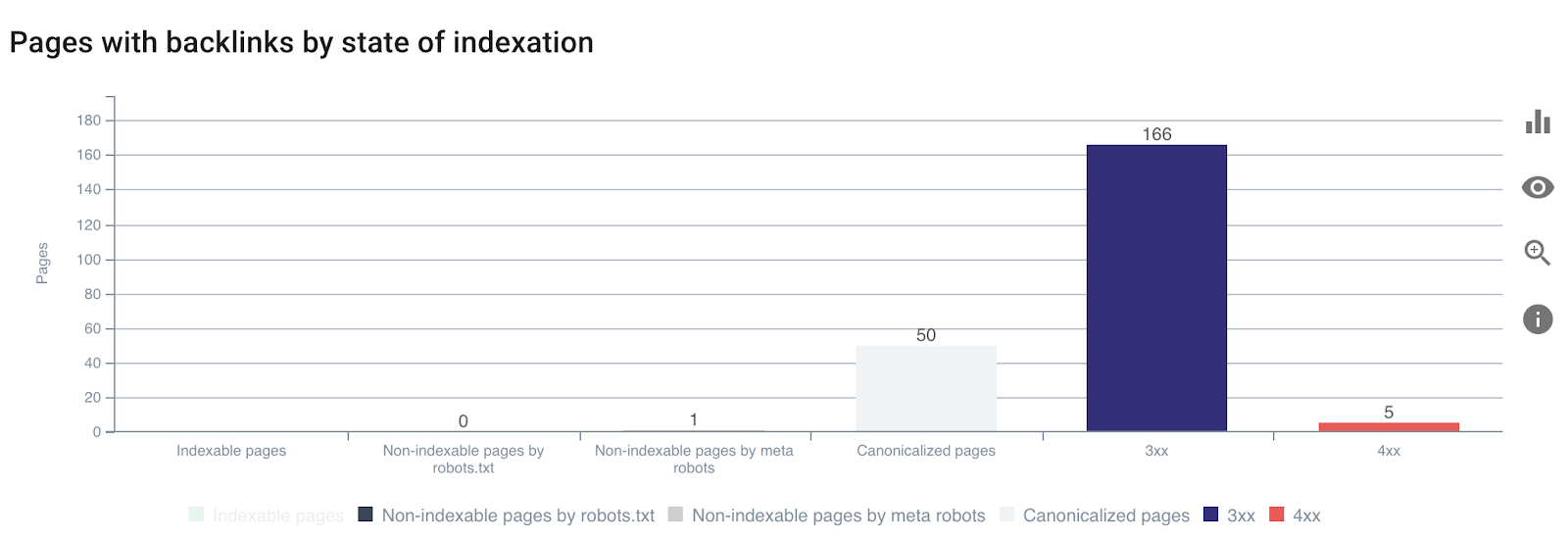
In this instance, we know that 166 pages with a “3xx” status code receive links. Even if Google transfers (internally) the popularity of a 301 page to the 200 page, the best practice is to modify the link destination towards the 200 page:
Backlinks > 301 > 200
Backlinks > 200
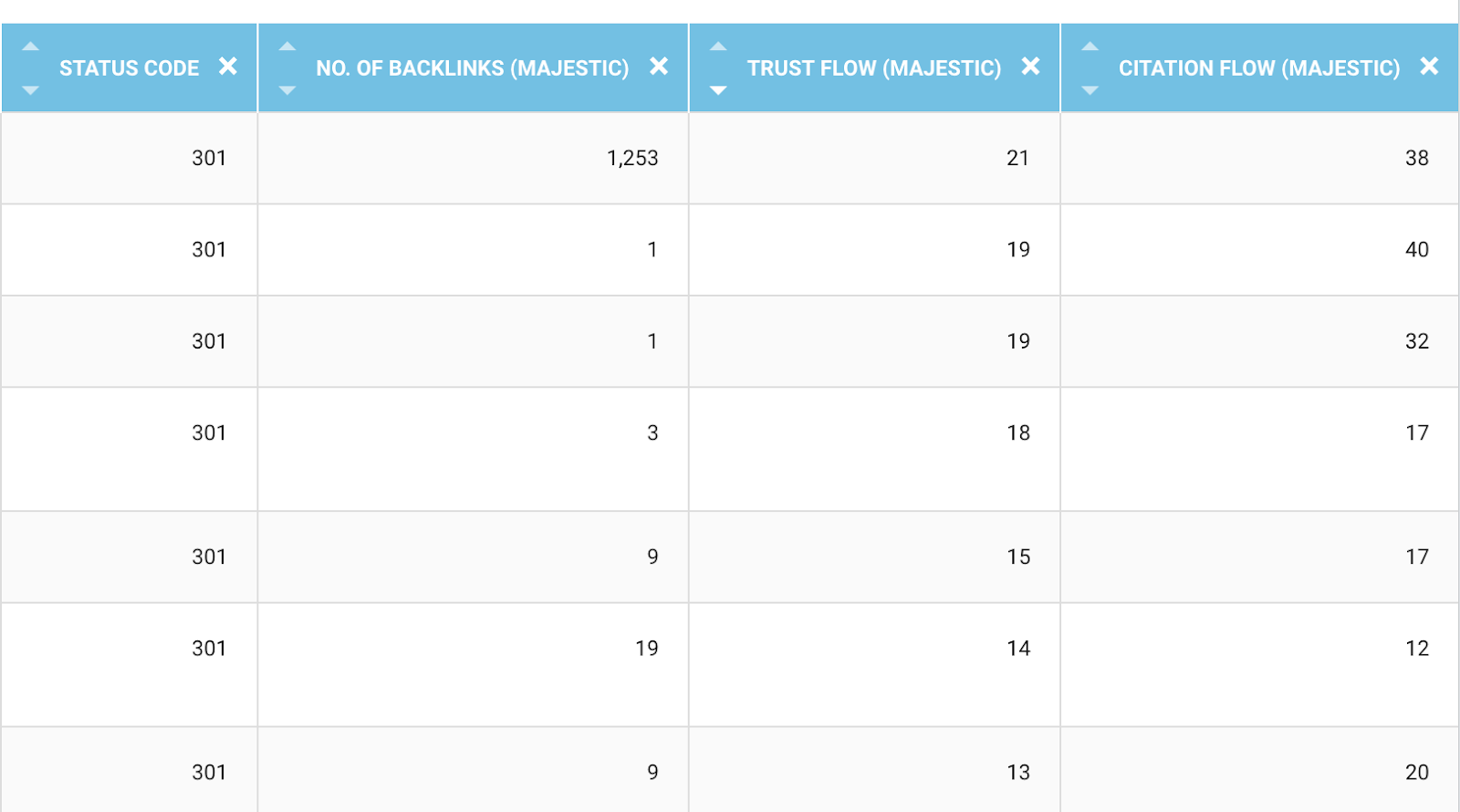
In order to prioritize which 3xx backlinks need to be modified first, a best practice is to display the TF / CF to address the most important backlinks first.
Via the Oncrawl Query Language (OQL), you can only display backlinks with a minimum of X in Trust Flow and Y in Citation Flow.
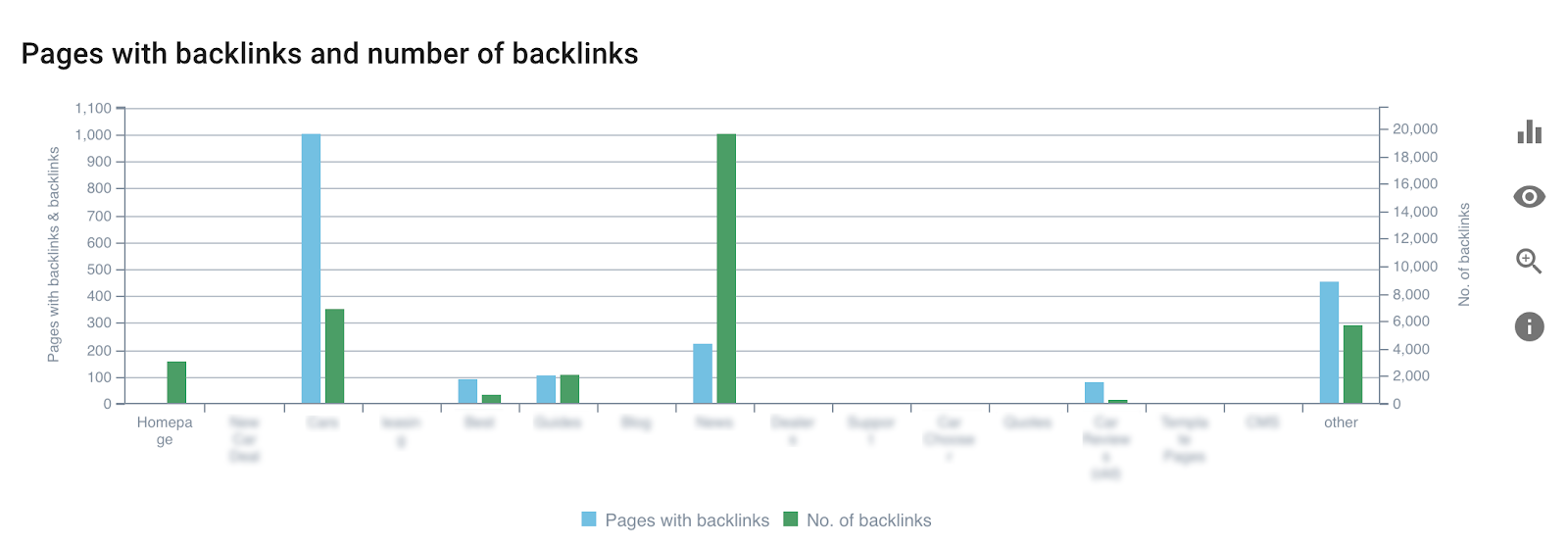
Pages with backlinks and number of backlinks
Thanks to the cross-analysis of your crawl and the backlinks of Majestic, we can analyze which of your pages groups receive the most backlinks. These groups are of course based on your segmentation.
Then, you can analyze:
- Which pages categories receive the most backlinks,
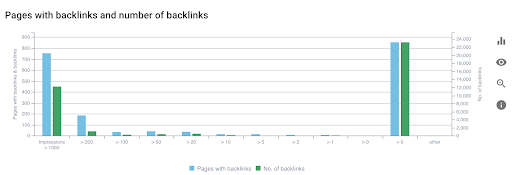
- Which pages get the most impressions taking backlinks into account,
- If there is a relation between backlinks and impressions on your website.
Pages with backlink and number of backlinks by depth
This chart allows you to easily visualize the number of backlinks in relation to your depth level.
In the case of a website redesign, the best practice is to do a Crawl over Crawl and to compare backlinks before and after the redesign. Thus, you will be able to analyze whether some pages point in 301 to the homepage (and so do their backlinks) and adjust the situation accordingly.
This chart also allows you to determine which pages receive backlinks and whose depth level is too deep in the structure. If they receive links (and thus power), they may be important pages. So you need to raise them in the structure and to adjust your strategy.
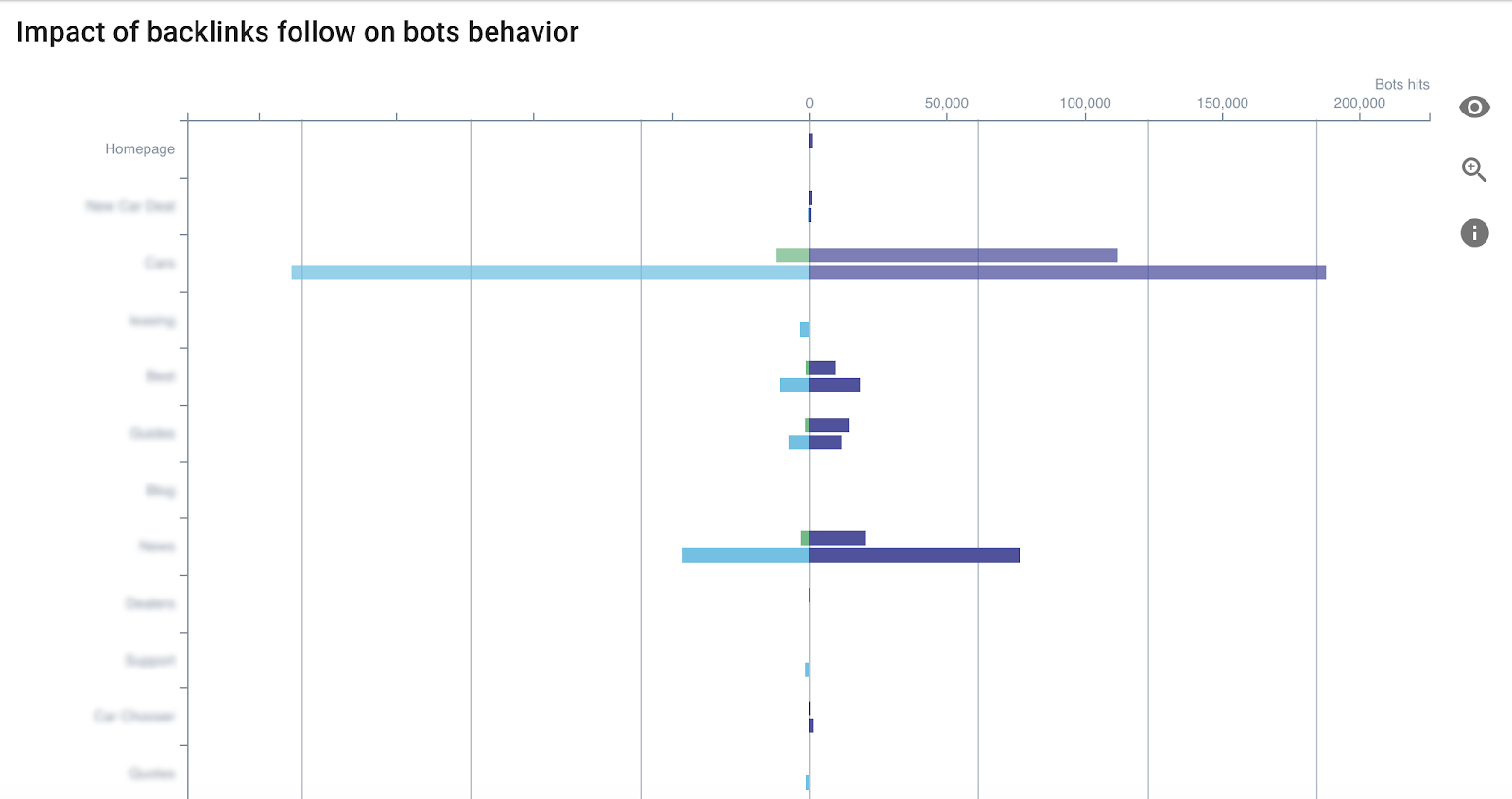
Impact of backlinks follow on bots behavior
Googlebot browses the web from link to link and attaches great value to backlinks.
In this chart, we can visualize whether the number of backlinks has an influence on Google’s behavior. In short, will a page which has a lot of backlinks be more visited?
Impact of backlinks follow on SEO visits
This chart allows us to visualize the number of SEO visits according to the number of backlinks by page group based on your segmentation.
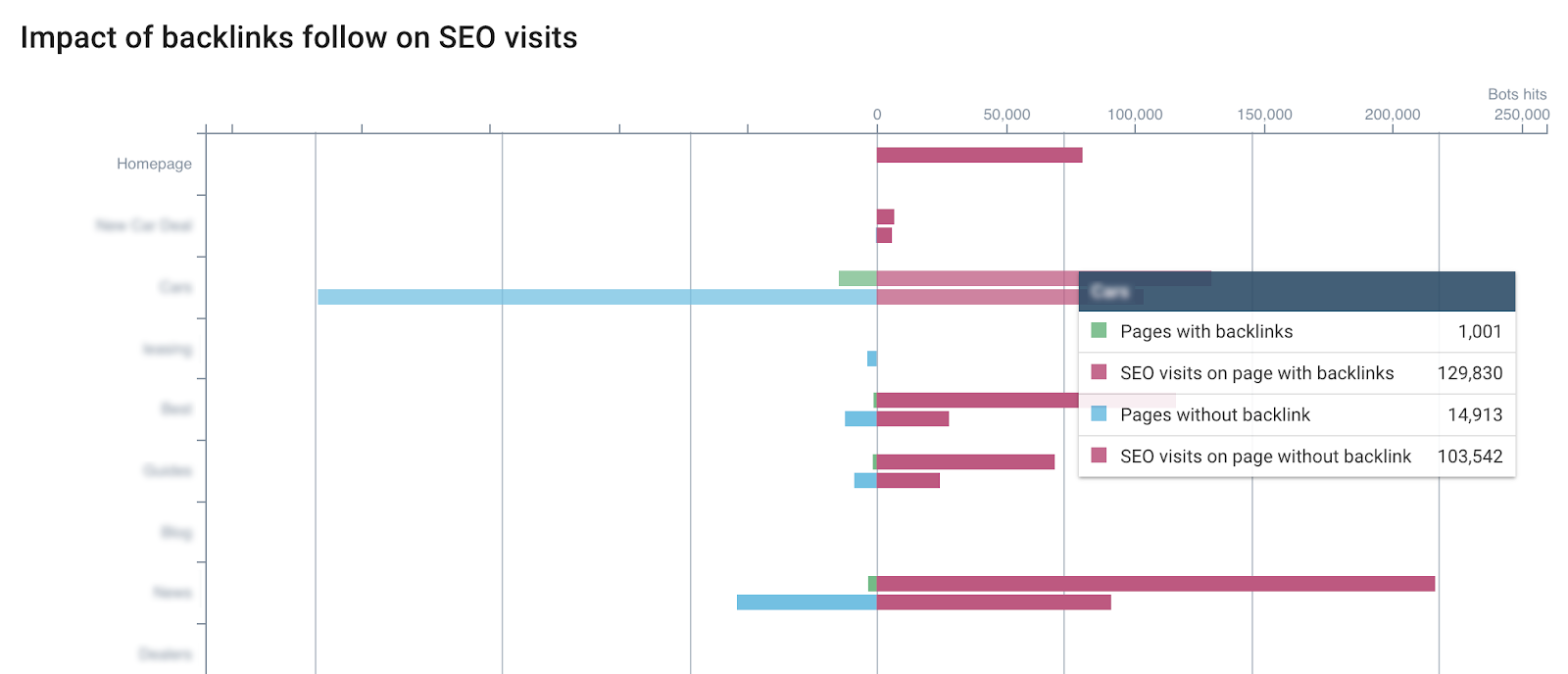
If we focus on a group of pages:
- Pages with backlinks: 1001
- SEO Visits on these pages: 129K
- Pages without backlinks: 14,9K
- SEO visits on these pages: 103K
Thus, we can affirm that the pages which receive backlinks are significantly fewer than pages which don’t receive backlinks but still generate more traffic. In our case, the acquisition of backlinks for this group of pages is greatly recommended in order to increase SEO traffic. Sounds logical, doesn’t it? It may seem like a reasonable assumption, but thanks to this chart, we can actually make correlations between traffic and backlinks with a predefined filter on the Follow according to the pages groups.
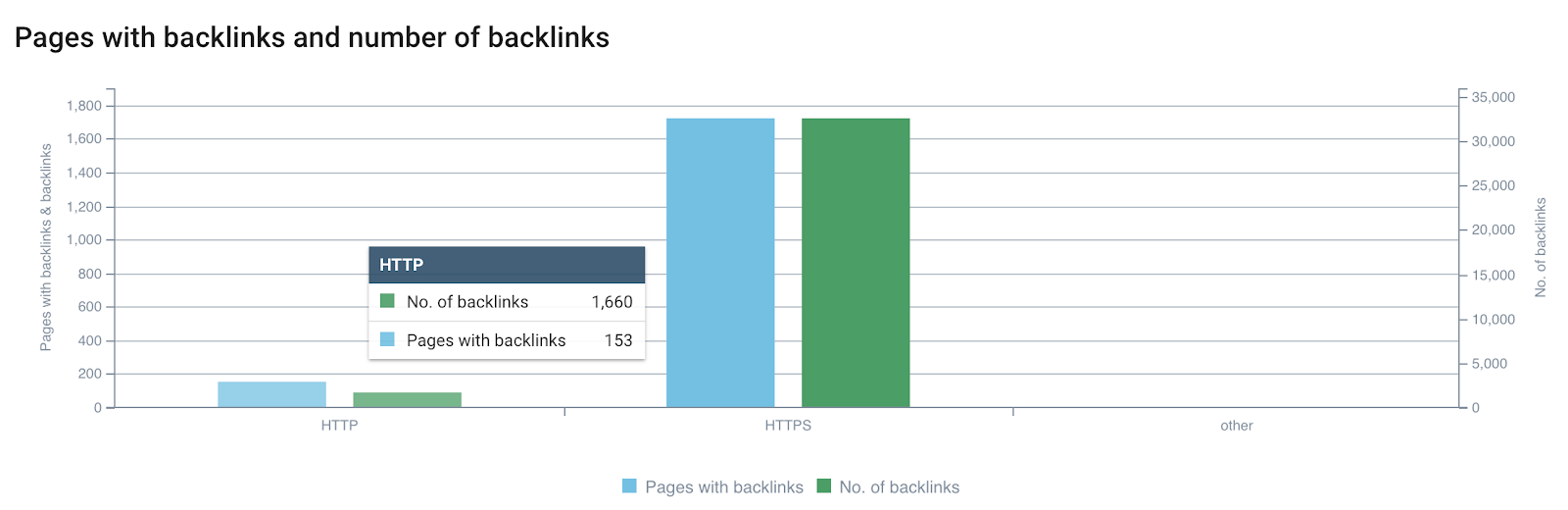
HTTP / HTTPS
With your HTTP / HTTPS segmentation, it is also possible to easily visualize whether a set of “HTTP” pages receives backlinks or not.
This also allows you to modify the destination of your link or to check if the page which receives the link returns the right status code.
The cross-data analysis of Crawl / Log / Backlinks allows you to quickly and easily find areas of improvement in order to create a more powerful website. The idea is to analyze how your external links arrive on your website so you can improve them before seeking for other sources of links.